View the online publication we released for the 20th anniversary of the painting competition Maľba.


Monika Hurajová
(*1999, Gelnica)
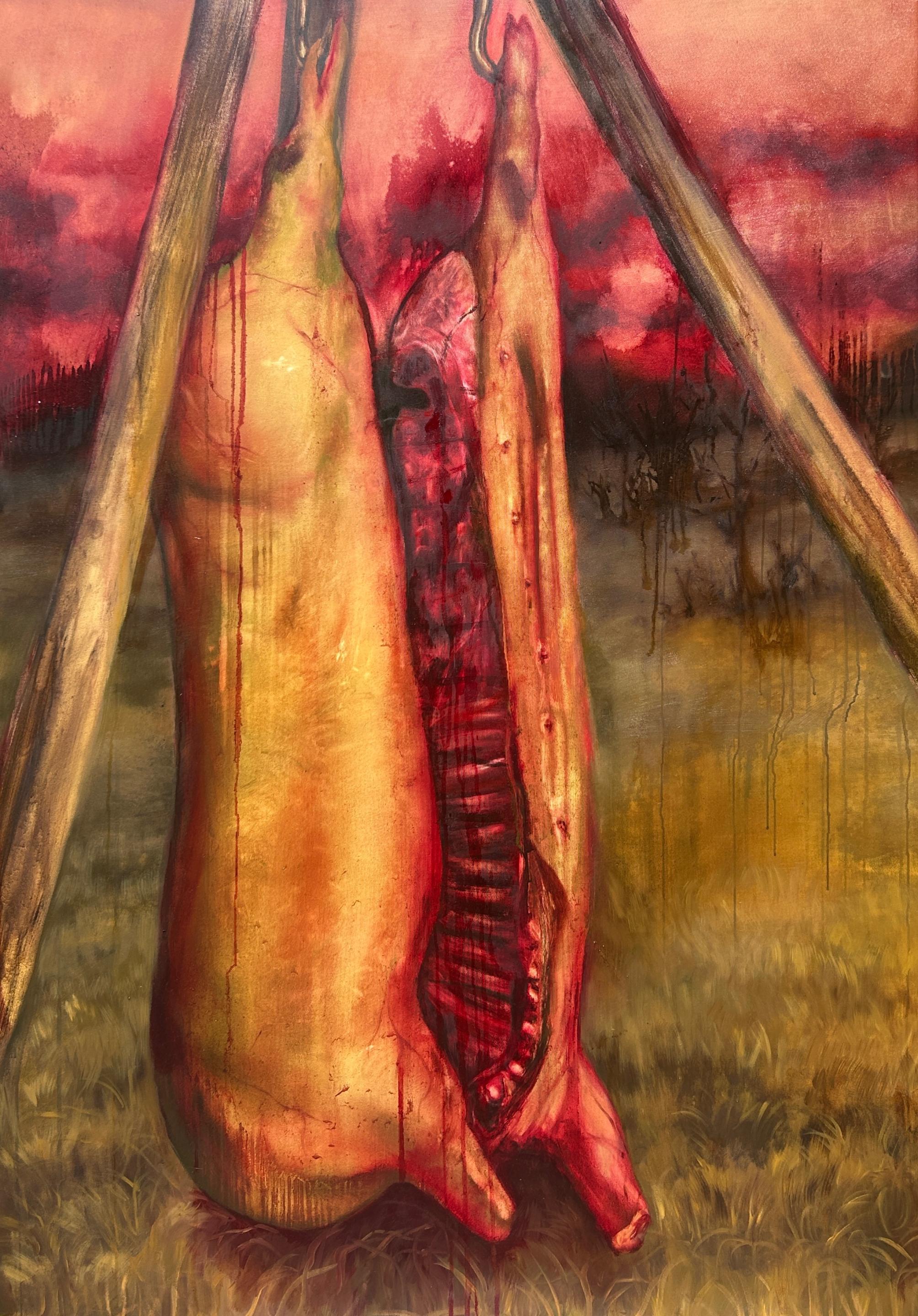
Still life
2026, oil on canvas, 150 x 105
2019 – 2025, studied at the Academy of Arts in Banská Bystrica, beginning her study of painting in Prof. Hološka’s Studio of Classical Painting Disciplines, and graduating in the STARTUP Studio led by Doz. Triaška. Academic year 2021/2022, completed a stay at the Academy of Fine Arts in Warsaw, studying painting under the guidance of Prof. Wojciech Cieśniewski; 2024 – 2025, at the Accademia di Belle Arti di Brera with Prof. Carlo Bernardini. 2023, 2024 and 2026, a finalist in the Painting Competition.
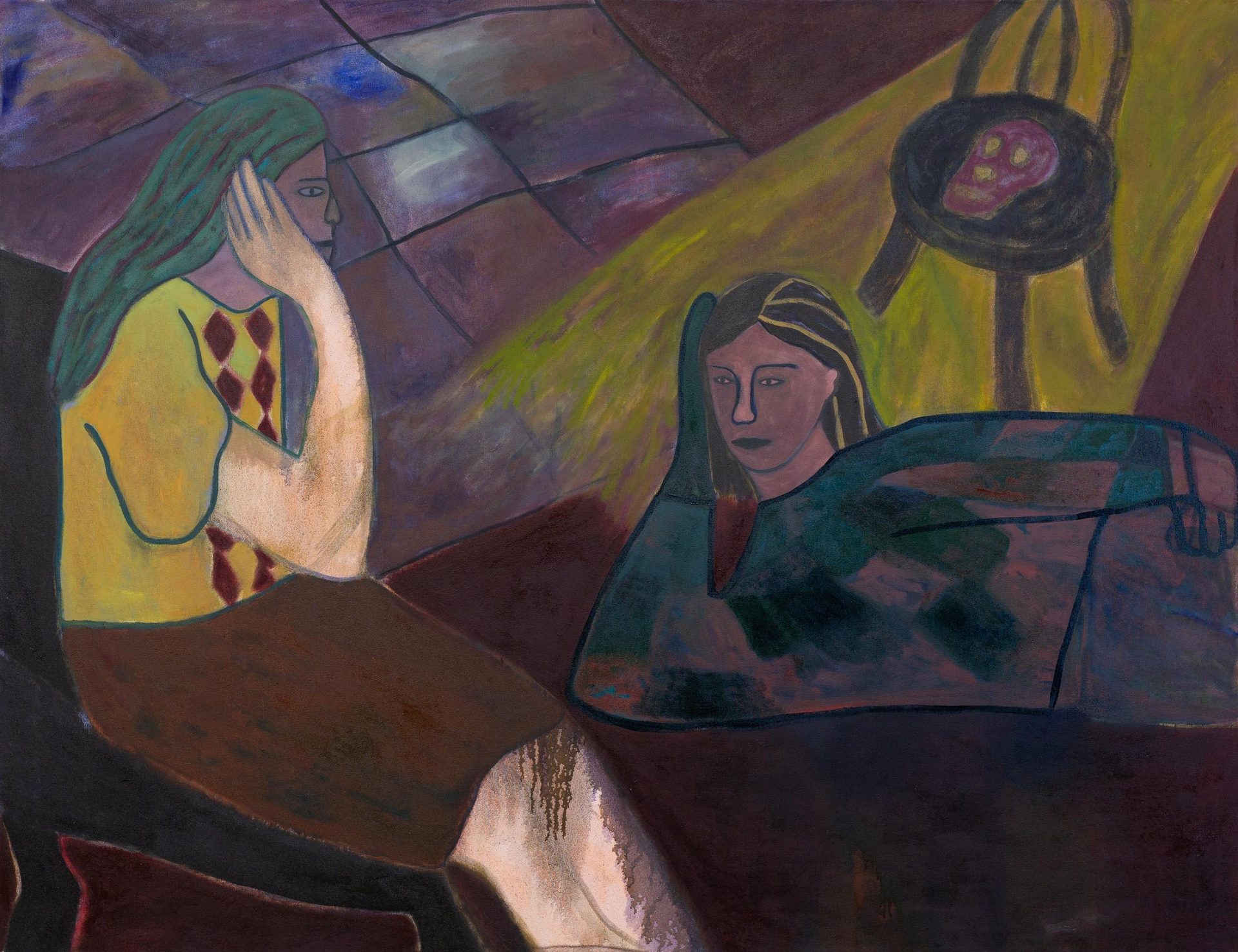
Monika Hurajová works primarily in the medium of oil painting, predominantly on figural compositions. In her art she examines the inner world of the human being and the dynamics of interpersonal relationships. Originally she focused on a painterly interpretation of psychological phenomena: the instinct of self-preservation, for example, or the mirror principle. She was interested above all in the experience of pain, its suppression and denial. In her later works she has developed the themes of stepping out of one’s comfort zone, seeking one’s own identity, and inability to openly articulate one’s own opinion. She often communicates these motifs using the symbol of thin drapery, which appears in her work as a metaphor of the boundary between safety and vulnerability.
Her final entry Still Life (2026) works with the contrast between the brutality of corporality and the everyday quality of the environment in which violence is played out as a commonplace component of life. The motif of pig-killing functions not only as a documentation of rural reality but as a metaphor of sacrifice, or of the enduring presence of death in a space that outwardly gives an impression of being almost peaceful. Her artwork is a probing of the themes of vulnerability, corporality, and the transience of human (animal) being. As the artist herself points out, the title of the work alludes ironically to the tradition of the painterly still life. At the centre of the composition, instead of aesthetic objects of abundance there is a body deprived of its inner parts. The work thus opens up questions about the utilitarian relationship to the body, the normalisation of violence, and the dullness of feeling regarding practices that survive as part of our tradition. Hurajová confronts the viewer directly with the savage aesthetic of the traditional rural pig-killing. She builds up tension using dramatic and even apocalyptic colours, with blood-red, pink and ochre tones predominating. The openness of the wound is sharply contrasted with the rustic construction of tripod and hook, whereby the work even takes on a ritual character. This painting is not a naturalist record of village custom; rather, it is a meditative metaphor about the border between life and death and the fragility of the organic receptacle. In the visual processing of the theme one can plainly read a dialogue with such key figures of art history as Chaim Soutine and Francis Bacon.
