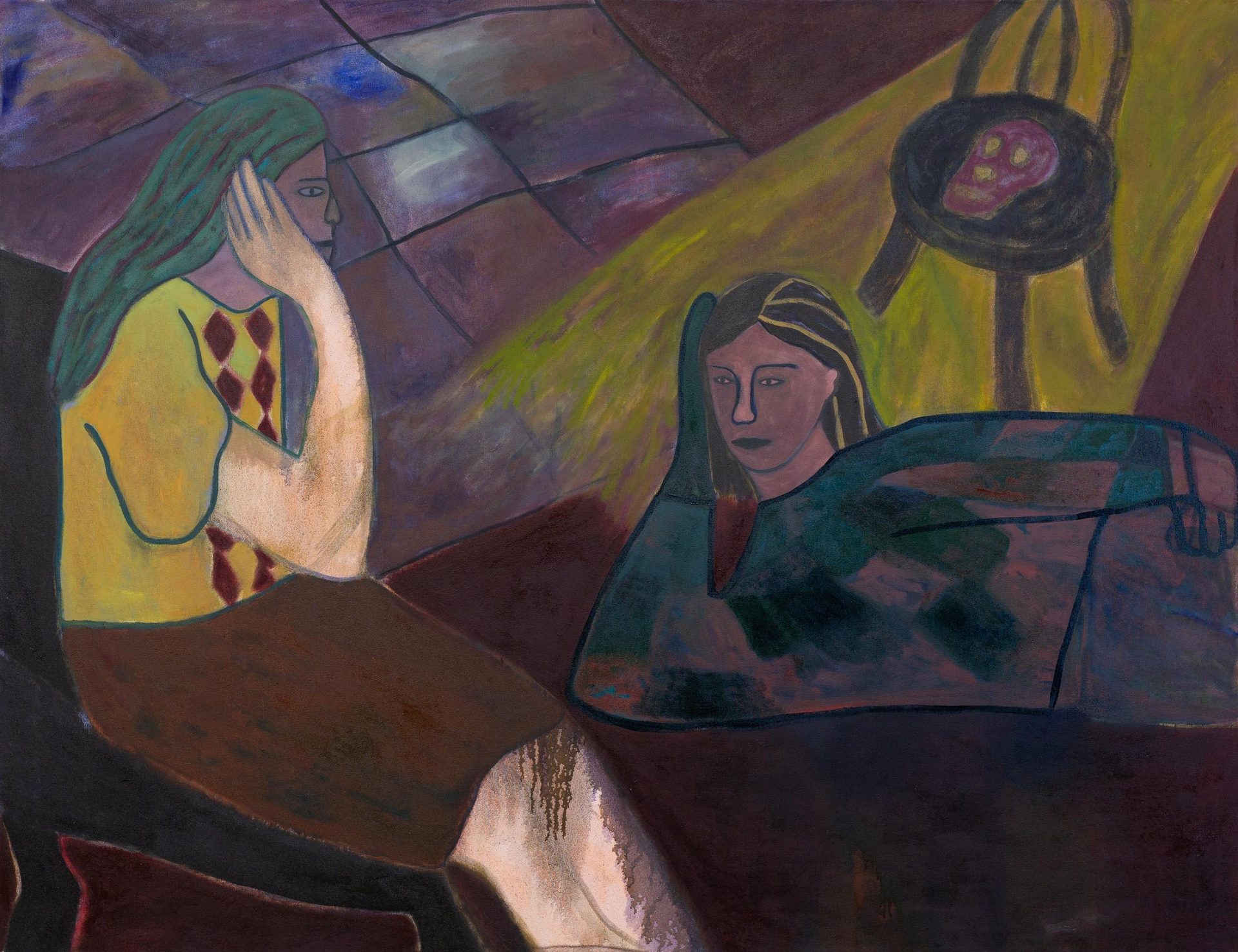
View the online publication we released for the 20th anniversary of the painting competition Maľba.


Anna Kyjovská
(*1996, Skalica)
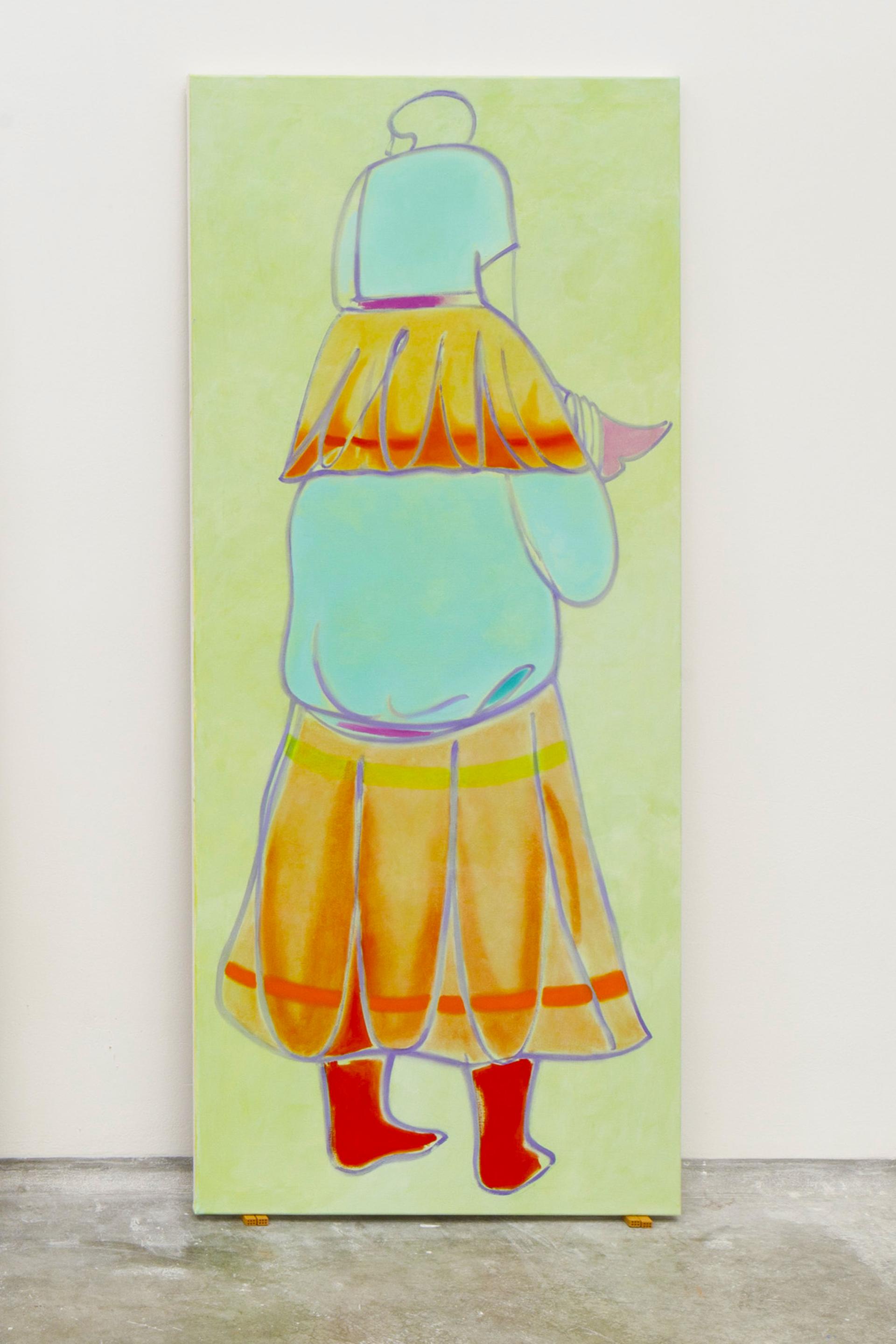
Reveal
2025, acrylic and oil on canvas, 170 x 70
2016 – 2022, studied painting at the Academy of Arts in Prague with Vladimír Skrepl. 2019, completed a study stay in Photography Studio 2 at Prague’s UMPRUM with Václav Jirásek and Štěpánka Stein; 2018, in the studio of visiting artist Simon Starling. She lives and works in Prague. 2023 and 2026, finalist in the Painting Competition.
Anna Kyjovská’s work is based on an intuitive painting process, in which she combines references to modernist painting with an aesthetic of children’s, folk, and unschooled art. Her painting is distinguished by a striking (basic) use of colour, large contrasting surfaces, and stylised figural motifs. The inspiration seems to come from classical modernism (Malevich, Mondrian), while the actual performance is purely contemporary and uncomplicated, stripped of any deposits whatever of historicism. This artist reaches for objectivity; her expression makes it clear that she has learned from the Czech milieu, where reference to the avantgarde traditions undoubtedly resonates more strongly. She acknowledges that what inspires her above all is enthusiasm, the enthusiasm of anyone at all for creative activity. Often she takes subjects from non-academic figuration: children’s art, naive art, and pilgrimage art or ‘home art’. Important for her is the motivation, the thought and the overall concept. Painting remains the primary discipline for Kyovská, although often she is happy to supplement it with other media (drawing, object, ceramics). During the creative process she actively experiments with a variety of hobby techniques and approaches; in the final result she preserves her distinctive (light, joyful) visual expression across media.
Her final entry Reveal (2025) is part of a series thematising the metaphor of a personal ‘place of pilgrimage’ (sacred space), where individual experience meets with spiritual symbolism. Via figurative painting with architectural elements, she examines the theme of home as a place, but also as a certain inner state. Regarding her work, Kyjovská adds: ‘The figures move between what we know and what we feel. They head in the direction of home, or they seek it.’ Kyjovská works with the ambivalence of Christian iconography; using this, she manages to perceive even the most ordinary thing as potentially spiritual. In her painting the sacred naturally combines with the profane and the everyday takes on an important significance, amounting actually to a spiritual dimension, which we often overlook in ordinary life. Iconography serves her as an open visual language, via which she draws attention to the spiritual potential of ordinary life experience. Sacredness is not confined to exceptional events or miracles, but emerges in ordinary situations. Kyjovska’s painting indirectly speaks of a spirituality of the everyday and on the need for ‘banal’ holiness in the splintered contemporary world.
