View the online publication we released for the 20th anniversary of the painting competition Maľba.


3rd place
Dávid Čerťanský
(*1998, Levice)
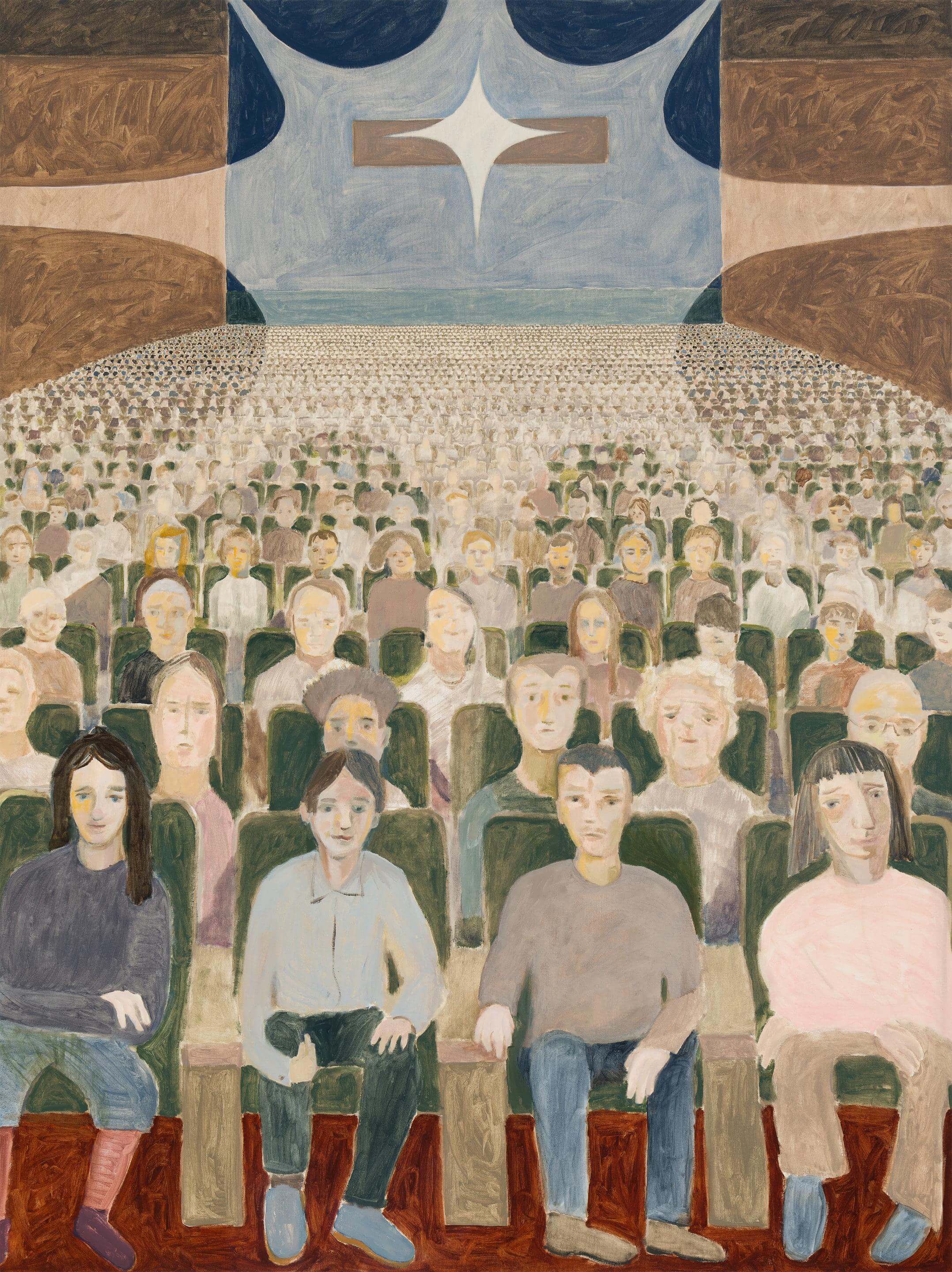
Cinema
2025, oil on canvas, 200 x 150
2018 – 2022, studied at the Academy of Fine Arts in Prague in the Painting 3 Studio, led by Josef Bolf and Jakub Hošek. 2019, completed a study stay at AVU in the studio of guest artist Alexey Klyuykov. 2020, study stay at Taipei National University of the Arts, in the Department of Fine Arts. Academic year 2022– 2023, continued his studies at AVU in Painting Studio 4, led by Marek Meduna and Petr Dub. 2020, won an acknowledgement at Kunstpreis der Roland Gräfe Stiftung. 2026, finalist in the Painting Competition.
Dávid Čerťanský, a debutant in the competition, has a long-term artistic engagement with the issue of perception, which he explores using illusive and material principles of painting. He is interested in how the painting becomes a means of disturbing visual certainties and opens a space where reality may be put in question. His works oscillate between figuration and abstraction of the motif, while exploring historical and contemporary painting procedures, their limits and modes of actualisation. Čerťanský works with illusive layers, narrative fragments and visual games, which thematise the possibilities of vision. In recent times he has focused on the human being’s connection to the world of technology, as well as Nature and its processes. That leads him to reflect on the relationship of humanity and the mobile image, and how they are mutually formed. Figuration in his paintings is not at the service of unequivocal narrative; rather, it creates an open space for interpretation, where the viewer becomes an active observer. Characteristic of his art is working with illusion, stratification of pictorial meanings and their unexpected combinations, fragmentariness, and updating of traditional painting procedures, via which he creates visual situations with subtle tension and ambivalent significance.
His composition Cinema (2025) is a pictorial game that confirms the premises of this artist’s work as sketched above. Čerťanský opens up large themes of painting – he is interested in the boundary between reality and its visual representation, all the while deliberately unsettling the familiar certainties of the viewer’s gaze. He shows us how an image forms our perception of reality: his painting does not portray a scene, but draws the viewer directly into the plot as its participant. Čerťanský connects with the tradition of paintings which thematise the actual act of looking. As with Velázquez (Las Meninas), the observer here becomes part of the painting, and the boundary between the one who looks and the one who is observed is incessantly redrawn. This artwork develops the motif of the gaze, with the viewer as an integral part of the pictorial situation. As the artist himself points out: “... the surface of the canvas divides two groups of viewers, those in the cinema and those in front of the painting. Both groups follow and simultaneously are followed; both succumb to the illusion of light and dark, not knowing until the last moment whether they are following a comedy or a tragic drama. There is something else also that links them: each has someone sitting alongside who sees the same thing but nevertheless differently. What we are looking at is ultimately we ourselves following ourselves ‘live’.”
