View the online publication we released for the 20th anniversary of the painting competition Maľba.


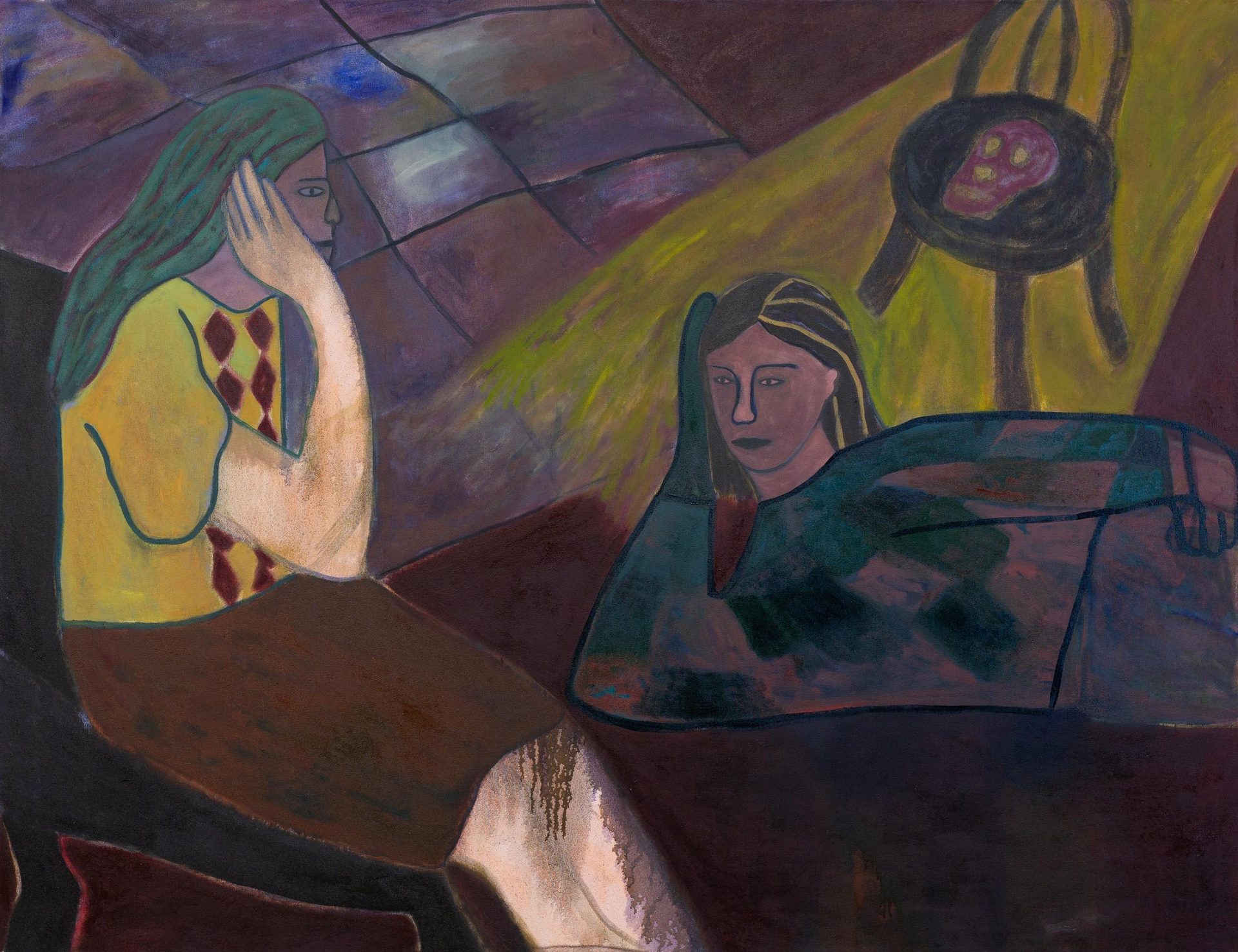
1st place
Laura Zvěřina
(*1993, Nitra)
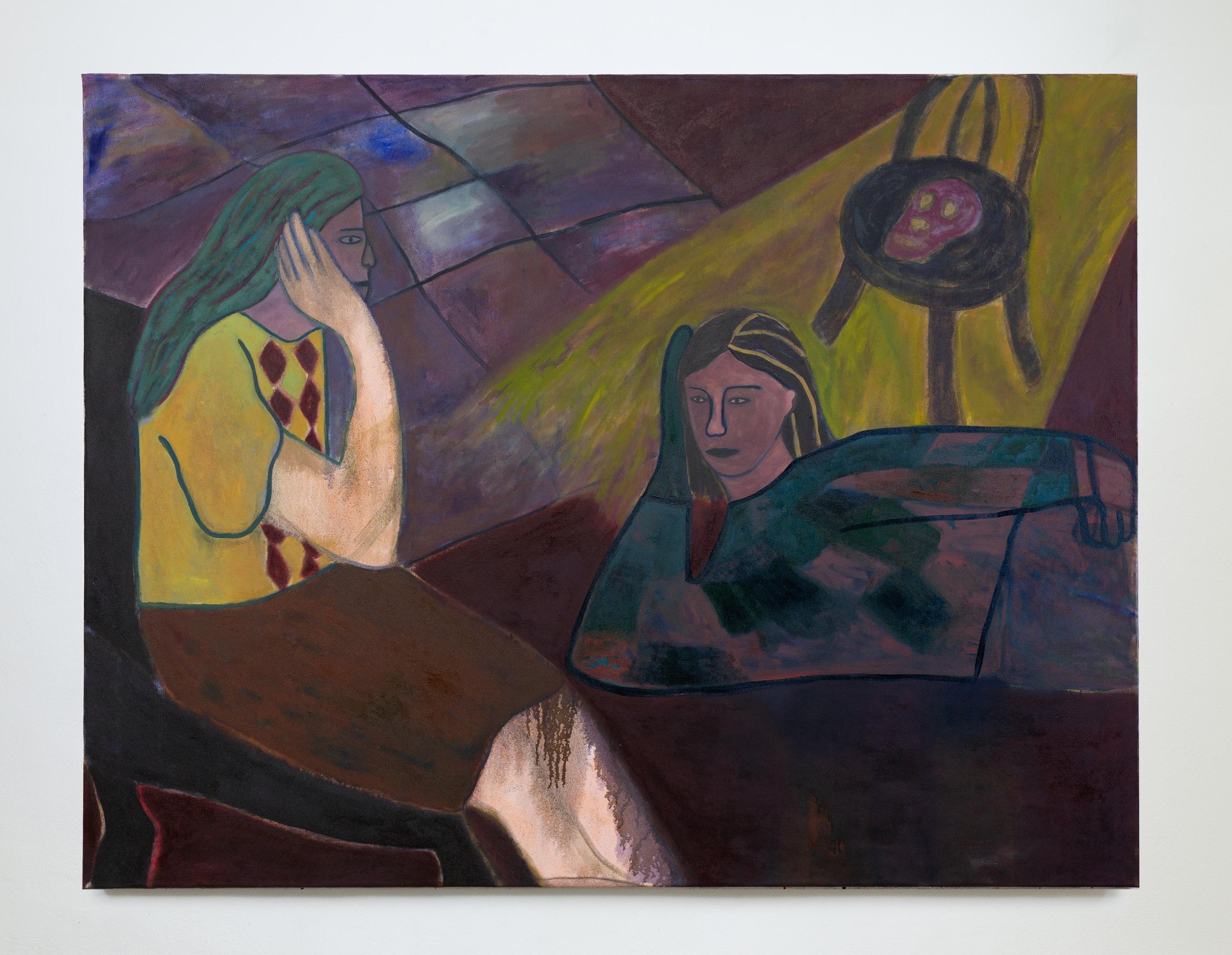
After the Last Review
2026, oil painting, 195 x 150
2018 – 2021, acquired her Masters Degree at the Academy of Fine Arts in Prague, in Painting Studio 2 led by Vladimír Skrepl and Jan Šerých. 2014 – 2018, completed her Bachelor’s Degree at the VUT Faculty of Fine Arts in Brno, in the Intermedia Studio led by Václav Stratil and Filipa Cenek. 2012 – 2013, studied architecture and urbanism at the STU Faculty of Architecture and Design in Bratislava. During her studies, completed stays at the Studio of New Media at AVU in Prague (2019), FAVU Video Studio (2018) and FAMU Centre of Audiovisual Studies (2015).
Laura Zvěřina, a debutante in the competition, works with the figure and with situations where closeness, tension, and various forms of refusal intersect. She proceeds from her personal experience, which she moves onto a more universal plane, using female figures and their mutual relations. Her situations often take on the character of theatrical scenes or role-play, leaving it unclear what is authentic and what is staged. She is inspired by personal and collective memories, folklore, literature, and film imagination. Zvěřina is interested in how collective trauma influences the experience of individuals and groups, and how these layers are imprinted upon paintings, objects, videos and texts. Repeatedly she returns to moments of unwanted intimacy, rejection, or subtle forms of social and institutional labelling. She projects these experiences into scenes where the personal life event is combined with more general themes.
Her oil painting After the Last Review (2026) evidences what she is attempting. While the female figures portrayed share the same intimate space, their mutual interaction comes across rather as abstracted. Emerging loosely from self-portrait motifs, the figures move between lived experience and stylised role. The sketched interior and deformed perspective create a psychological space on the borders of reality and stage-crafting, distantly recalling expressive film scenes from The Cabinet of Doctor Cagliari. The painting itself, despite its contemporary context, has an atmosphere that evokes modernist compositions. This is due not only to the construction of space, but also to a certain strange melancholy and feeling of existential loneliness, typical of painting in the interwar period. The women sitting without direct mutual interaction evoke a rootlessness and vulnerability, while at the same time signalling resistance to the hierarchies of intimate and social relationships. As the artist herself says: “I am interested in the tension between care and control, peace and latent violence, and the ways in which personal and shared experiences form relationships and our perception of the world. My work combines introspective post-ironic figures with landscapes of contemporary uncertainty, intimacy and repugnance, without losing its paradoxically absurd and poetic level.”
