View the online publication we released for the 20th anniversary of the painting competition Maľba.


3rd place
Eva Vaňová
(*1999, Košice)
silent city
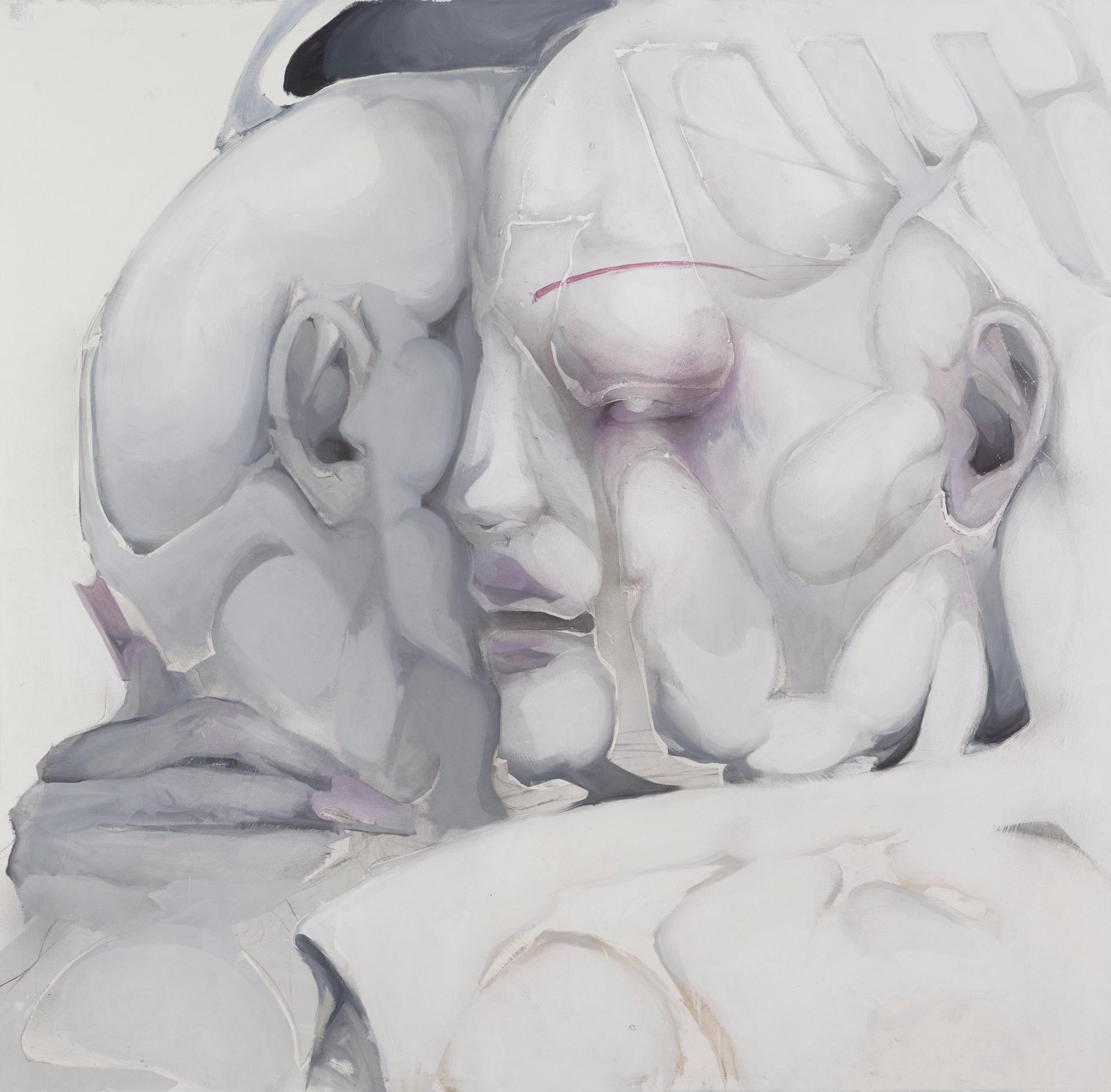
2024, acrylic, yarn, cotton, 120x85
2020–2024, studied at the Technical University in Košice in the Faculty of Art, in the Studio of Free Visual Art with Doz. Oto Hudec. 2024–2026, continued her studies at Brno University of Technology’s Visual Arts Faculty, in the Environment Studio led by Barbora Klímová. 2024, 2025, finalist in the Painting Competition.
Vaňová’s art concentrates primarily on cooperation with marginalised groups. She has a long-term involvement in inclusive projects focused on various communities, and her art works serve especially for overcoming social and cultural barriers, often in combination with education. She is exceptionally active in collaboration with children’s communities, which stimulate creativity in a workshop form (children from a Children’s Home, Roma and autistic children, children with hearing disabilities, and currently children from the Ukrainian community in Brno). Again in this year’s competition, Vaňová presents a conceptual register of painting which is actually a ‘secondary’ result of her activist projects. As she herself points out, participative art has become an important instrument for transforming society and overcoming the boundaries between artist and viewer.
Her final entry Silent City (2024) again presents an artist’s response that is important both artistically and personally. The work originated as a product of participative projects with the Ukrainian community in Brno. One of the workshops was a mapping of the surroundings through the eyes of children, who make acquaintance with their new setting via cartographic drawings. Vaňová walks their usual routes with the children; they show her where they move. From the children’s records, she has selected and abstracted the lines that mark the surrounding area and their movement within it. The resultant work combines a pattern from maps of Brno with a composition inspired by children’s drawings. The pattern is the central building block of the composition: it combines a surface and a gestic sewing pattern, which creates an important tension – an opposite pole to the rational portrayal of reality, and a map created by children. Vaňová’s entry works with the contrast between aesthetics and content, employing art as an instrument of critical thinking – visual attractiveness draws one’s attention, so as to disclose the theme of the exclusion of the Ukrainian community in Brno.
(The text is from the catalogue for the competition Painting 2025, N. Gažovičová)
