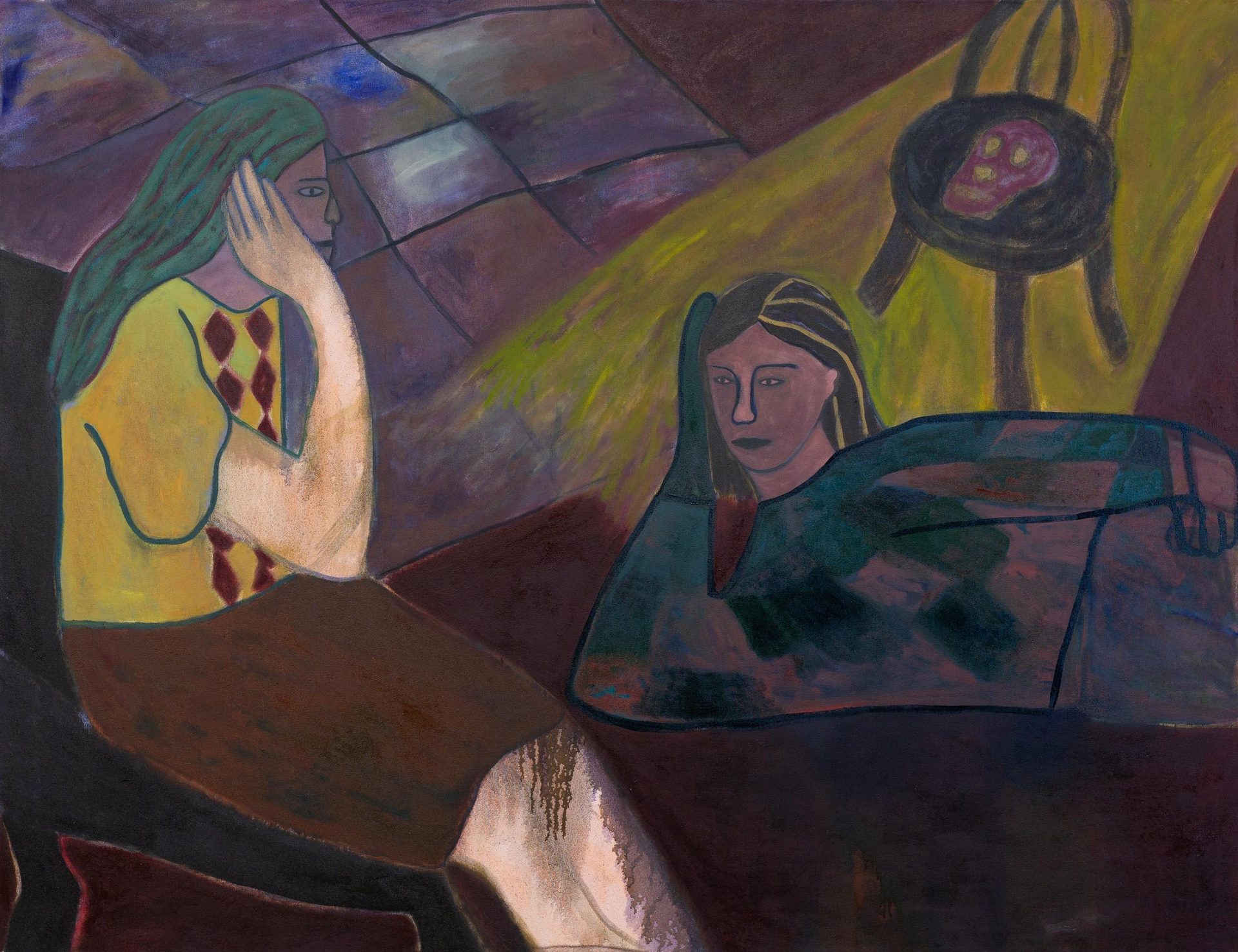
View the online publication we released for the 20th anniversary of the painting competition Maľba.

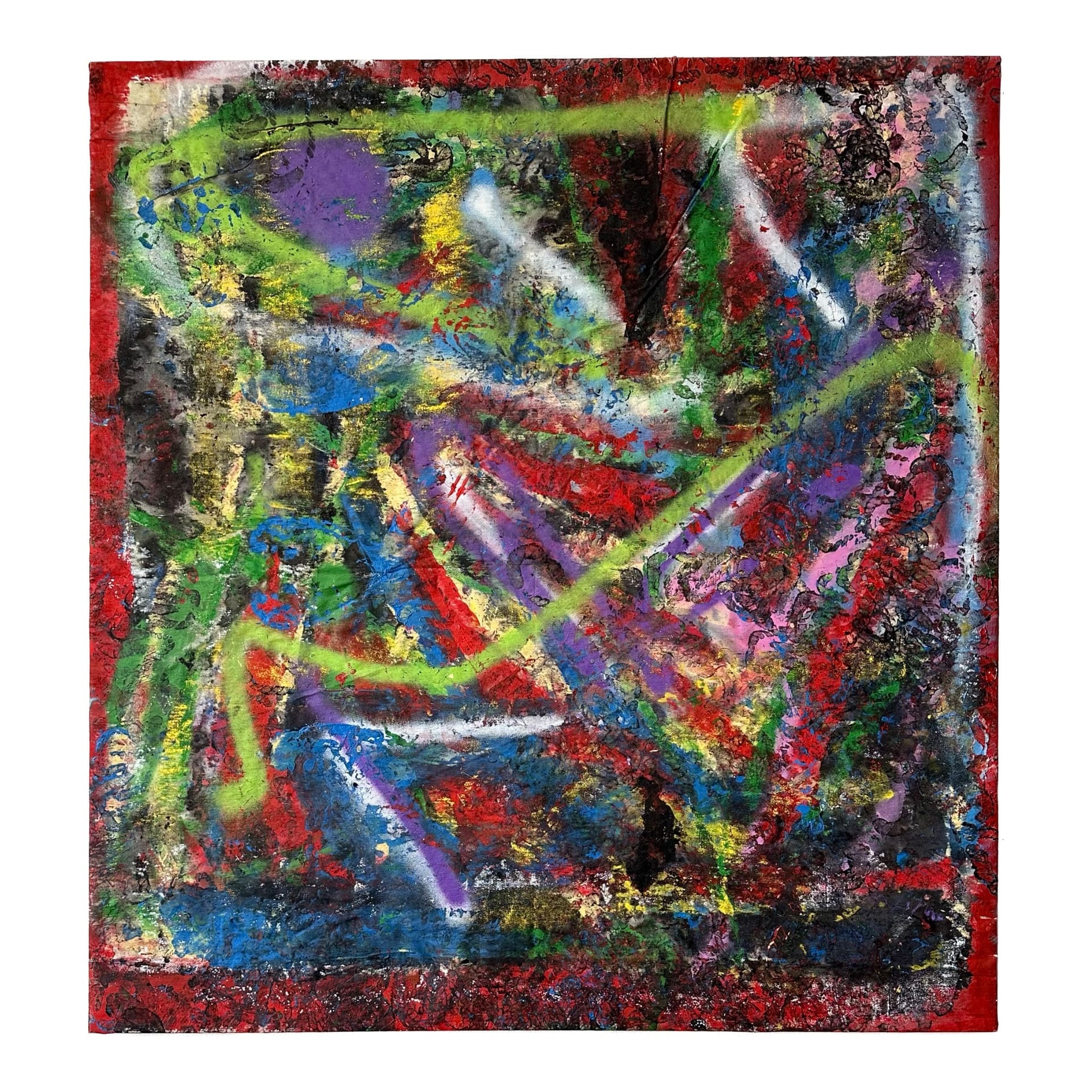

Felber Oskar
Parts unknown
2023, acryl, spray and ink on canvas, 150 x 140 cm
In the years 2013 - 2019, he studied at the TUKE Faculty of Arts in the Contemporary Art Studio with doc. Szentpetery. He is a multiple finalist of the Painting competition (2021, 2022 and 2023). He lives and works in Prague. Felber's source of inspiration is obvious - pop culture, B-movie horror, occultism, tattooing... His painting is defined by an intuitive process - the painter's handwriting is relaxed and sketchy, but ultimately dominated by static matter, colors and structure. He uses a visual shortcut, while maintaining an expressive expression and works with irony and exaggeration with ease. His works are created by constant repainting, only gradually reaching the final state of a still feeling "raw" work, created by thick layers and deposits of oil. He also works superbly with color, he does not shy away from non-traditional materials or experimentation, e.g. with textiles and overlaps into 3D objects. Felber constantly researches the properties and intermingling of various art media, while he further applies the acquired knowledge in his own art practice. His approach to painting is programmatically eclectic - he combines expressive expression with personal mythology, constantly balancing on the border between figurativeness and abstraction. The final work Part Unknown (2023) was created through a combination of different painting techniques on an unstretched canvas on the ground. In the context of Felber's work, it represents a return to abstraction, which (as it seems) can be inexhaustible and inspiring for the author even after a long figurative pause. Action, gesture, spontaneity, but also a trashy approach to painting characterize the entire emerging series with the same name Parts Unknown. Detachment from the subject world returns Felber back to expressive starting points; to a non-committal, "pure" painting expression, and even if the present work does not meet, so to speak, the "classic" (majority or lay) idea of painting as such, it is positive that this "bad painting" position is relevantly represented in the competition.
